
Chesterfield Projected and Actual Release
A projected or scheduled date is an agency calculation based on the sentence and information then available. It can be useful for planning, yet it remains anticipated until the custodian completes release. An actual release date records a finished custody event. VADOC’s locator uses the documented term “release date,” but the live field should be read as a computed date before departure. A final release notice, signed release document, or jail release record is stronger proof afterward.
A Chesterfield County pretrial detainee has no sentence-based projected release date. Release can follow bond, dismissal, or another court order, and the Sheriff may need up to two hours after a court or bond decision to verify paperwork and complete out-processing. A sentenced local inmate has a computed end date controlled by the orders, credits, and any other holds. A state prisoner has a VADOC computation. These are not interchangeable.
Transfer also matters. Leaving Chesterfield County Jail for Riverside Regional Jail or VADOC is not community release. A release from BOP custody can likewise be followed by another authority. Always ask what custody ended and whether another lawful hold followed.
Find Chesterfield County Release Dates
Start with the physical custodian. Chesterfield County Jail calculates local custody under the controlling orders. VADOC computes qualifying state sentences and maintains the state locator. A court supplies the legal sentence and credit orders, but its docket is usually not the final jail arithmetic. The full Chesterfield County release-record path helps when the current custodian is unclear.
- Identify whether the person is pretrial, serving a local term, in Riverside, under VADOC authority, or in federal custody.
- For VADOC, search the first three letters of the first name with the full last name, or use the seven-digit DOC ID. Compare optional identifiers.
- Read the displayed release date as anticipated while custody continues. Contact the listed facility or District 27 if the status needs clarification.
- For a Chesterfield local sentence, obtain the signed court order and ask the jail at 804-748-1476 for the computed release information it may lawfully provide.
- Check for another case, warrant, transfer, or detainer. After departure, request the existing Sheriff JMS or VADOC release record.
The VADOC Inmate and Supervisee Locator is the official state search. It covers current custody and supervision, updates daily, and is not promised as a permanent archive after full discharge.
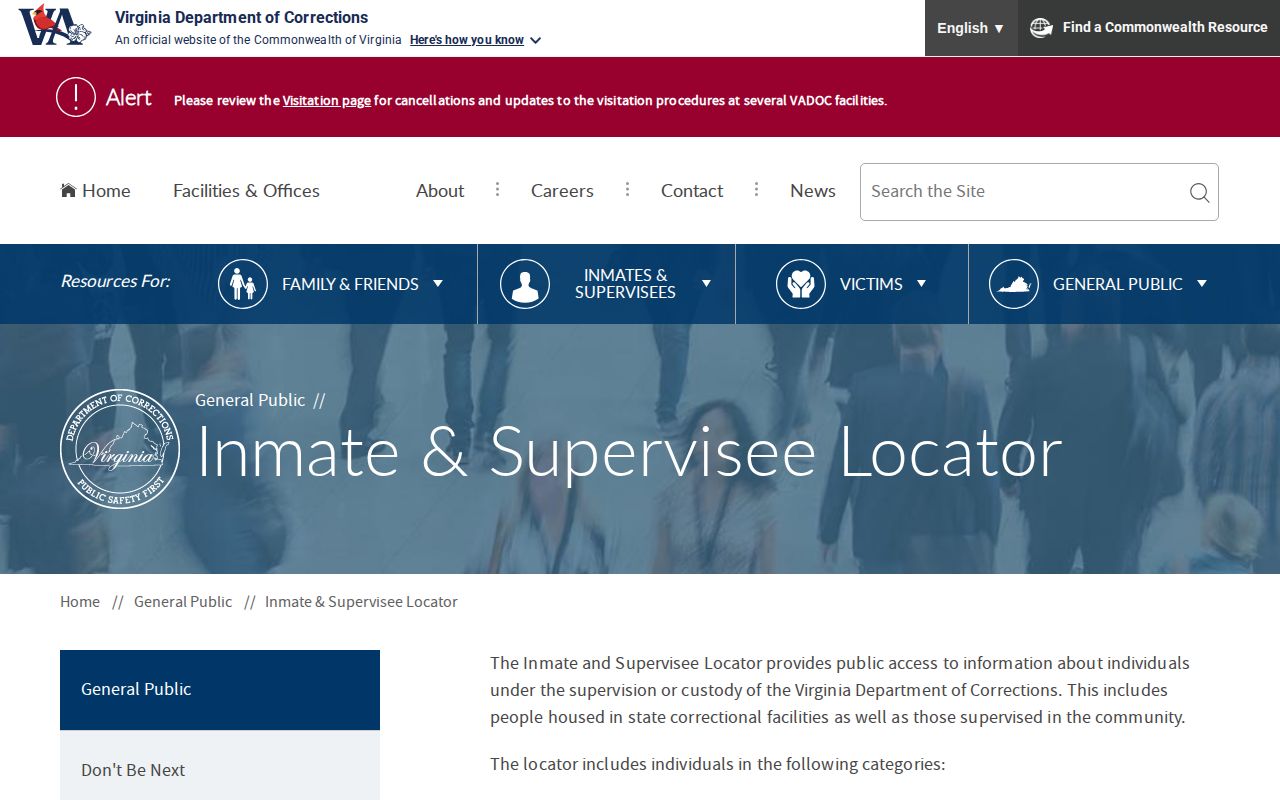
Note: No result can reflect full discharge, spelling, timing, or the wrong custody system, so it does not prove release.
Virginia Earned Sentence Credits
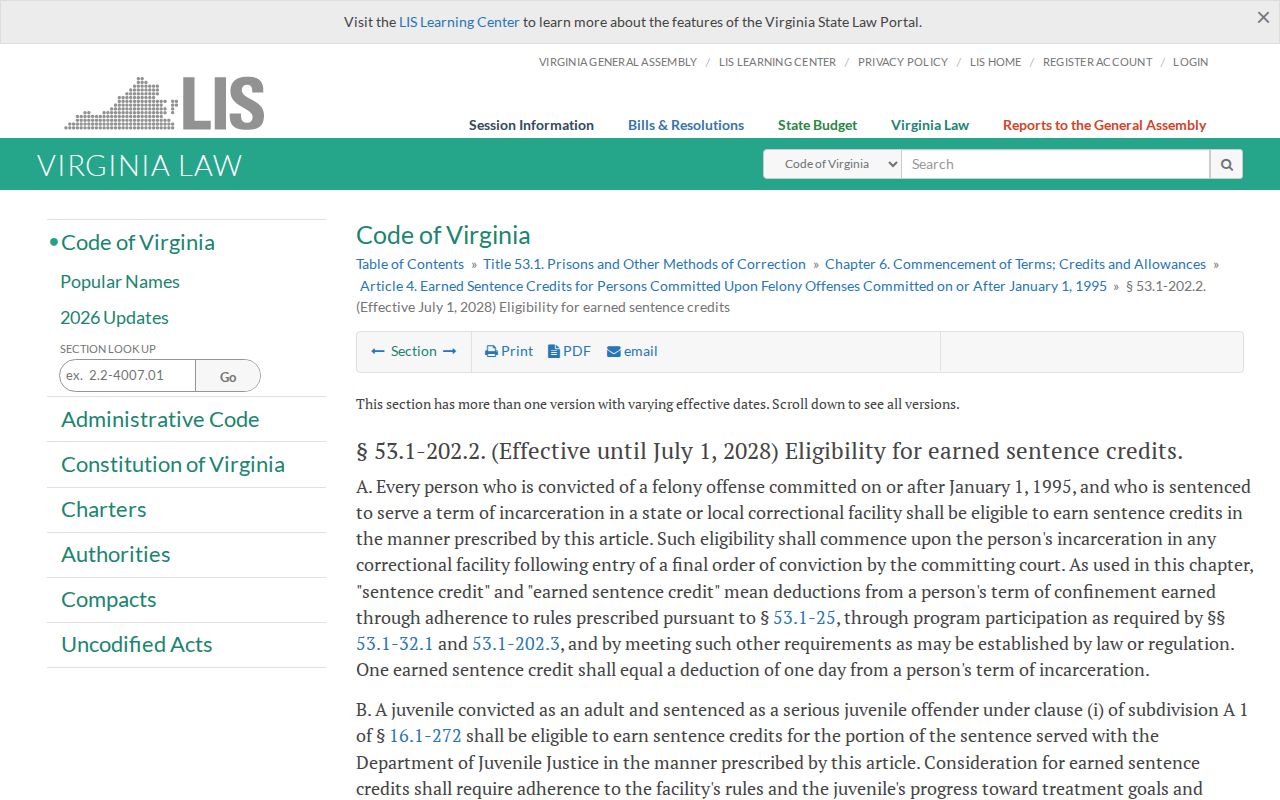
Virginia does not use one universal 85 percent rule. Under Virginia Code § 53.1-202.2, the modern earned-sentence-credit framework generally applies to felony offenses committed on or after January 1, 1995. One credit is one day deducted. Eligibility depends on the offense, sentence, and current statutory version.
Section 53.1-202.3 sets rates and exclusions. Listed offenses in subsection A can earn no more than 4.5 days per 30 days served. Even if all such credits are earned and kept, that works out to about 86.96 percent of the combined served-and-credit period, not 85 percent. Other eligible offenses use classifications: Level I can earn 15 days per 30 served, Level II 7.5, Level III 3.5, and Level IV none. Conduct, program participation, and rule compliance affect class placement.
Credit is earned, not guaranteed in advance. Virginia Code § 53.1-189 permits forfeiture for rule violations and works with restoration rules. A projected date based on the best earning class can therefore move later after a disciplinary decision, while a corrected jail-credit order can move it earlier. The offense of conviction also matters because some offenses are excluded from the higher rates. Read the current statute rather than applying a percentage remembered from another case.
The official earned-credit eligibility page identifies the statutory framework used in a Chesterfield County state-sentence calculation.
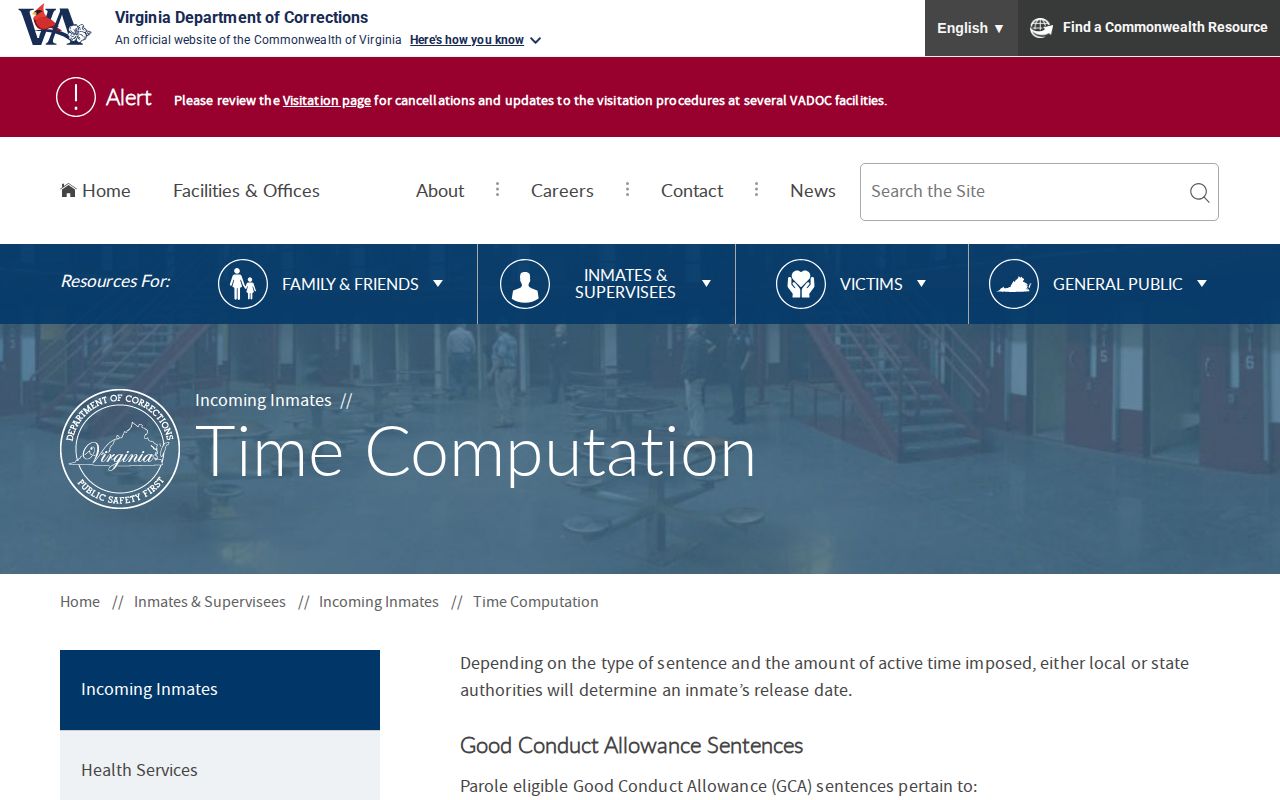
The official VADOC time-computation page explains which authority calculates the date and names the factors used. It says VADOC calculates an active Earned Sentence Credit sentence exceeding 12 months. Local authorities handle other qualifying sentence types. Jail credit, total sentence, earning class, disciplinary infractions, added sentences, and legal events can all alter the result.
Chesterfield Local Release Computation
Local jail dates follow different rules. Virginia Code § 53.1-116 requires the jailer to maintain commitment, term, and person records and a written earned-credit policy. Unless a mandatory minimum controls, a sentence of 12 months or less for misdemeanor convictions can earn one day of credit for each day served, including qualifying pretrial days, if jail rules are not violated. The statute also has separate provisions for parole-eligible prisoners and possible added credit tied to work or classes.
This is a legal framework, not a self-service calculator. Concurrent and consecutive terms, pretrial confinement credit, mandatory minimums, another unserved case, and detainers can change the outcome. The Chesterfield Sheriff must apply the court orders and controlling law. A Circuit or General District docket helps identify the sentence, and the Chesterfield Circuit Court Clerk provides the route for public final orders, but the Sheriff’s record supplies the local computed event.
Sections 53.1-186 and 53.1-187 govern sentence commencement and credit for confinement. A sentencing order may state an active term, suspended time, and whether terms run together or one after another. Pretrial days also must be credited to the proper case. Those choices can make a simple subtraction wrong even before earned credits are considered. Ask the court clerk for the signed order when the online summary is unclear, then direct computation questions to the authority that holds the sentence.
Older sentences can fall under the Good Conduct Allowance framework, which VADOC describes as generally applicable to parole-eligible felonies before January 1, 1995, and misdemeanors before July 1, 2008. Calling every deduction "good time" can select the wrong rule because modern felony Earned Sentence Credits, older allowances, and local jail credits arise from different statutes and eligibility dates. Identify the offense date and sentence type, obtain the signed orders and credited confinement days, and ask the responsible authority for its computation. A docket supplies the sentence and later orders, while the jail or VADOC performs the applicable calculation. Another consecutive term, corrected credit entry, or detainer may not appear clearly in a short docket summary, so the final release artifact remains necessary after a projected date has been explained.
Why Chesterfield Release Dates Change
A projected date changes when one of its legal or factual inputs changes. The correction must come from the computing authority, not from a private calculator. Some changes affect the anticipated exit from the current facility; others mean the person leaves one custodian but enters another.
| Factor | Possible effect | Record to check |
|---|---|---|
| Jail or pretrial credit | Moves the computed end date when credit is awarded or corrected | Court order and time-computation record |
| Earned-credit class | Changes how fast eligible state credits accrue | VADOC computation and governing statute |
| Disciplinary infraction | Can cause forfeiture or loss of credits | Custodian’s lawful computation record |
| New or corrected court order | Can alter sentence length or concurrent and consecutive treatment | Signed court order |
| Another case or detainer | Can prevent community release or cause transfer | Release or transfer record and receiving agency |
| Parole action | May authorize a supervised release when legally eligible | Board report plus final VADOC release document |
A Parole Board grant can precede planning and final processing. It is not the jail-door time. In the same way, dismissal of one charge does not end another hold. Each change must be tied to the authority and record that produced it.
Chesterfield Alternative Custody Dates
Chesterfield’s alternative-custody programs make the word “release” especially easy to misuse. Weekend jail residents can leave for community service and return to the jail at night. Work-release participants leave for approved daily activity and return. Home-incarceration participants remain in a custodial alternative, and the official county packet says they serve 100 percent of active jail time without statutory good time.
None of those routine movements is necessarily final discharge. Chesterfield Jail Operations describes weekend jail and work release, while the Home Incarceration Program packet supplies the no-good-time rule for that program. The person’s order and program status control the end date.
Virginia Code § 53.1-131.1 permits a court, in qualifying circumstances, to order limited remaining time on weekends or other nonconsecutive days. It does not create a blanket rule that a Sunday sentence expiration becomes a Friday release. No official Virginia or Chesterfield source found in the project research promises automatic early release for a weekend or holiday.
Note: A scheduled trip outside secure jail walls can still be part of an active custodial sentence.
Confirm Chesterfield County Release
Use the anticipated date for planning, then confirm with the custodian. VADOC says facility releases occur by 11:59 p.m. on the date, weather permitting. Chesterfield’s separate rule says a court or bond release can require up to two hours of out-processing. Neither timing statement should be transferred to the other system.
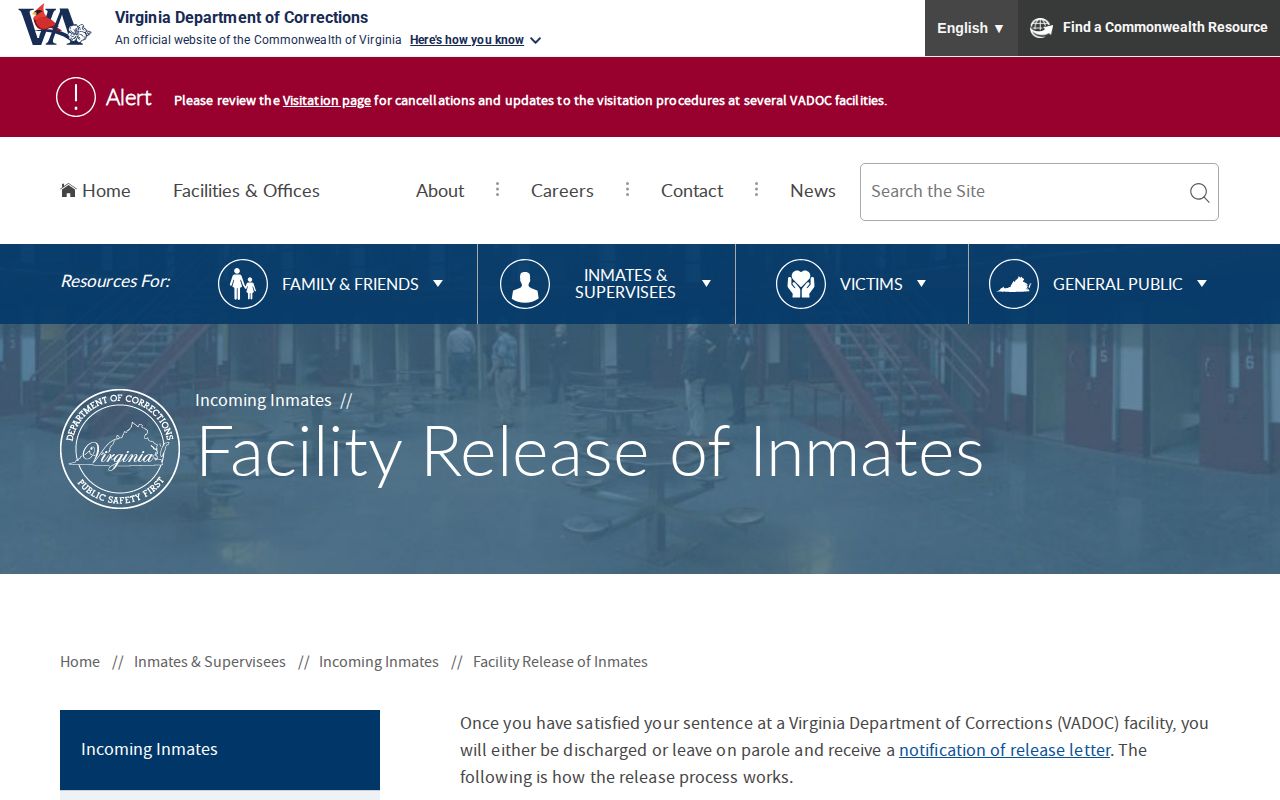
VADOC identifies final records such as an Order of Release, Conditions of Probation, Conditions of Parole, and a notification-of-release letter. The state facility-release procedure explains that the person reviews and signs the applicable papers. It also covers property, funds, medication, and transport for a state facility release.
For notice of a reported custody change, follow the VINELink inmate check process. Local jail VINE and VADOC’s NAAVI notification layer are separate registrations. An anticipated state notice can be updated, while a final release notice means the person is no longer in VADOC custody. Confirm any possible transfer or hold before treating that event as community arrival.
VADOC describes an advanced notification as an anticipated date, commonly sent about 30 days ahead and revised when the date changes. The later release-date notice states that the person is no longer in VADOC custody and that notifications stop. For a Chesterfield local sentence, use the Sheriff’s actual release record instead of importing that state-prison notice model. If records conflict, the physical custodian controls present location, the court controls the legal order, and the signed release or transfer artifact best documents the completed event.